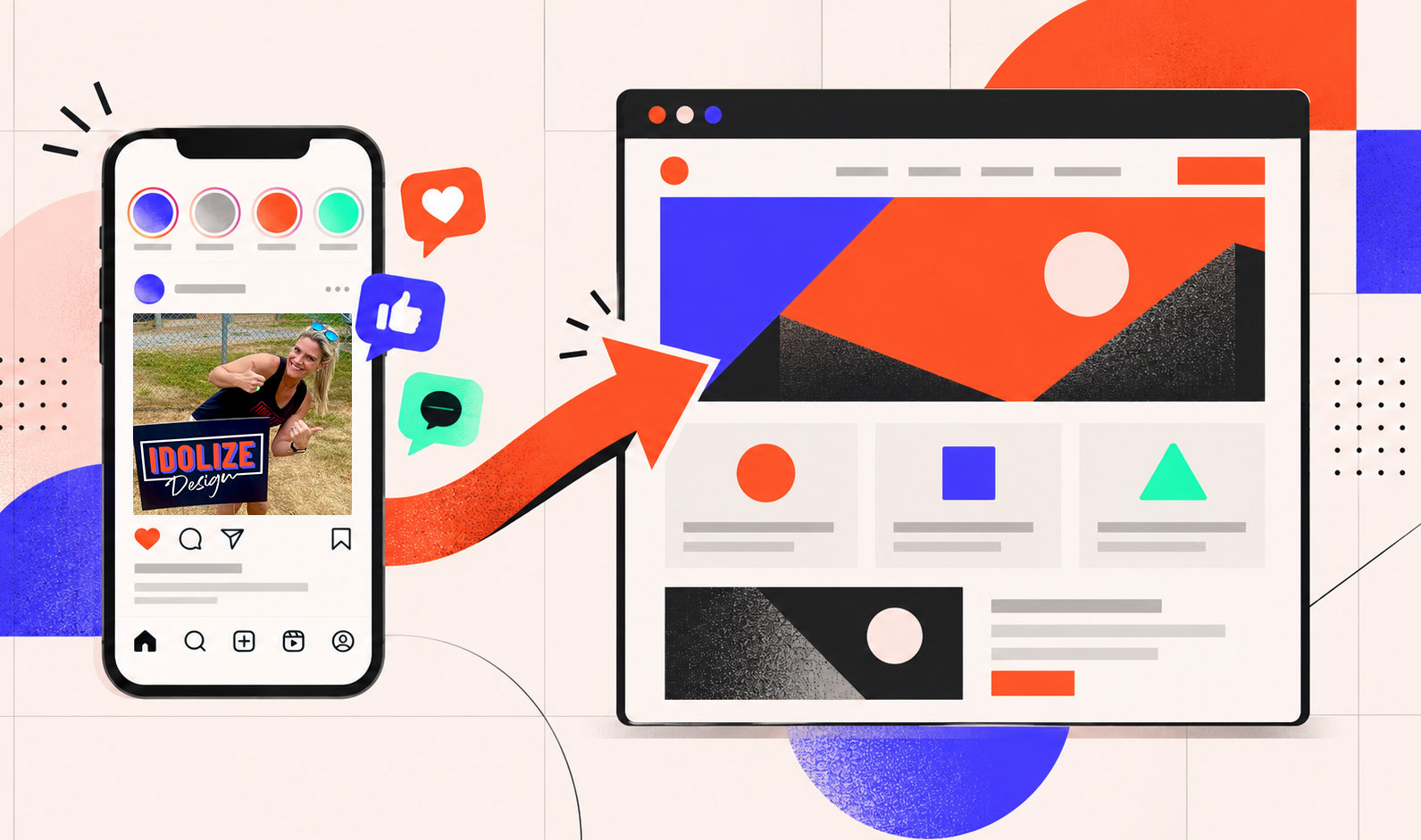

I say this with love, because Instagram can be a genuinely useful marketing tool for a business:
Your Instagram page is not a website.
And while we are here, your Facebook page is not a website either.
They are useful. They are important. They can help people discover your business, see what you have been up to, read reviews, look through recent work, and decide whether they like your general energy.
But they are still social media profiles.
They are not a professional online home for your business, no matter how thoroughly you filled out the About section.
Social Media Is Valuable. It Just Has a Different Job.
This is not an anti-social-media speech. Instagram and Facebook can be excellent marketing tools, especially for local businesses.
They let you share new projects, post updates, talk to customers, promote events, show some personality, and remind people that your business is alive and accepting money.
The problem starts when social media is expected to do everything.
Your Instagram bio is trying to explain your services in 150 characters. Your Facebook page has business hours from two years ago hiding under seventeen posts, four photo albums, and a review from someone whose profile picture is a truck. Your most important information is scattered across captions, pinned posts, highlights, and links that made perfect sense when you added them last March.
That is a lot to ask from a social media page.
A website gives all of that information somewhere organized to live.
You Do Not Own Your Social Media Presence
This is the part business owners do not always think about until something goes wrong.
You can spend years building an audience on Instagram or Facebook, but you are still building it on someone else’s platform. The rules can change. Your reach can drop. Your account can be restricted, hacked, disabled, or temporarily locked because an automated system decided your perfectly normal post about kitchen cabinets was suspicious.
And good luck finding a human being to explain the situation to.
Your website is different. It is an online asset your business controls. You decide how it looks, what it says, what customers see first, and where they go next. You are not arranging your entire business around the latest platform update or hoping an algorithm feels generous that day.
Social media is rented space.
Your website is home.
Your Facebook Page Is Not the Exception
Facebook pages can feel more website-ish than Instagram. They have service descriptions, hours, reviews, contact information, photo albums, and buttons. For many small businesses, creating a Facebook page is the first practical step toward having an online presence.
There is nothing wrong with starting there.
But a Facebook page is still limited by Facebook’s layout, features, search tools, and decisions. Customers may need an account to see certain content. Important information can be difficult to find. Your services are competing for attention with notifications, ads, recommended videos, Marketplace listings, and someone’s aunt posting forty-seven vacation photos.
Your business deserves a little more focus than that.
A Website Makes Your Business Easier to Find
When someone searches for a service near them, they are often using specific phrases: bathroom remodeling in Wilmington, commercial landscaping in Garnet Valley, a cleaning company in Newark, or a website designer serving Delaware.
A custom business website gives you room to create clear pages around the services you offer and the locations you serve. Those pages help search engines understand what your business does, who it serves, and when your website may be relevant to a local search.
An Instagram caption from eight months ago cannot do that job nearly as well.
Social profiles can absolutely appear in search results, but they do not give you the same control over page titles, service content, location information, internal links, calls to action, or the overall customer experience.
For businesses serving Delaware, Pennsylvania, Maryland, and New Jersey, a properly structured website can support local SEO with useful service pages, regional information, consistent business details, and content written around the questions local customers are actually asking.
Not by stuffing the name of every nearby town into one paragraph until it reads like a SEPTA route map. By creating genuinely useful pages with a clear purpose.
A Website Makes You Look More Established
People make quick judgments online. Fair or not, your digital presence helps them decide whether your business feels legitimate, trustworthy, organized, and worth contacting.
If a potential customer searches for your company and finds only a Facebook page, they may wonder:
- Is this business still active?
- What exactly do they offer?
- Do they serve my area?
- Where can I see their work?
- How do I request a quote?
- Why is the most recent post a Happy Fourth of July graphic from 2022?
A professional website answers those questions without making customers dig for clues.
It gives your business a polished place to explain your services, show your work, share testimonials, answer common questions, and guide visitors toward contacting or hiring you.
It also gives people something reassuring to find after they discover you on social media. Because yes, customers absolutely click from Instagram to your website to make sure you are real. We all do a little background check. It is fine.
Your Website and Social Media Should Work Together
The goal is not to abandon Instagram or Facebook and disappear into the woods with a domain name.
Your website and social media should support each other.
Social media is where you can be current, conversational, and visible. Your website is where people get the complete story, understand your services, and take the next step.
Your posts should send interested people to focused website pages. Your website should make it easy for visitors to find and follow your social accounts. Your branding, voice, offers, and business information should feel consistent everywhere.
That is a strategy.
Posting everything on Facebook and hoping people scroll back far enough to find your phone number is more of a scavenger hunt.
A Website Is Not a One-Time Decoration
There is one small catch: having a website only helps when the website actually works.
It needs current service information, working forms, accurate hours, updated photos, security, backups, software maintenance, and the occasional fresh set of eyes. A website that has been quietly collecting dust since 2017 is technically yours, but it may not be making the strongest case for the business.
Ongoing website management keeps your online presence updated, secure, functional, and aligned with the business you are running now—not the version of your business that existed when everyone was still obsessed with chevron patterns.
Okay, let me wrap this up…
If Instagram or Facebook is currently your business’s entire online presence, there is no shame in that. Plenty of companies start there because it is quick, familiar, and free.
But there comes a point when your business needs a space built around your goals instead of someone else’s platform.
Your social media pages should introduce people to your business.
Your website should help turn that interest into trust, inquiries, bookings, and sales.
At Idolize Design, we create custom WordPress websites and provide ongoing website management for businesses in Delaware, Pennsylvania, Maryland, New Jersey, and across the country. We build websites that look polished, explain what you do clearly, and give your customers somewhere better to land than your Facebook photo albums.




0 Comments